
This entry was posted on Sep 17, 2025 by Charlotte Bell.
Asana, the bodily follow, is essentially the most recognizable of the eight limbs of yoga. In the event you point out “yoga,” most individuals will mechanically image an individual in some stunning, flexible place. However, in fact, yoga is far more than simply asana. There are seven different limbs of yoga within the system of Ashtanga Yoga. (Right here, Ashtanga Yoga refers back to the conventional which means of the eight-limbed path, slightly than Ashtanga Vinyasa Yoga, the system developed by Ok. Patabhi Jois.) As well as, there are lots of different types of yoga that don’t embrace postures.
Within the context of the eight limbs, asana comes third, after yama and niyama. The primary two limbs present a stable basis for the remainder of the follow. They instill wholesome intentions in order that our follow can bear healthful fruit. As well as, they offer us tips for residing a swish life.
As a result of asana is the most well-liked side of yoga, it is usually essentially the most misunderstood. Western practitioners, who grew up on rigorous train, typically follow asana within the context of that acquainted paradigm. Once we consider train, we consider ideas like competitors and private bests. Consequently, we affiliate the flexibility to do acrobatic poses with being “superior.” However based on the yoga sutras, mastery of asana is a totally totally different factor.
The Asana Custom
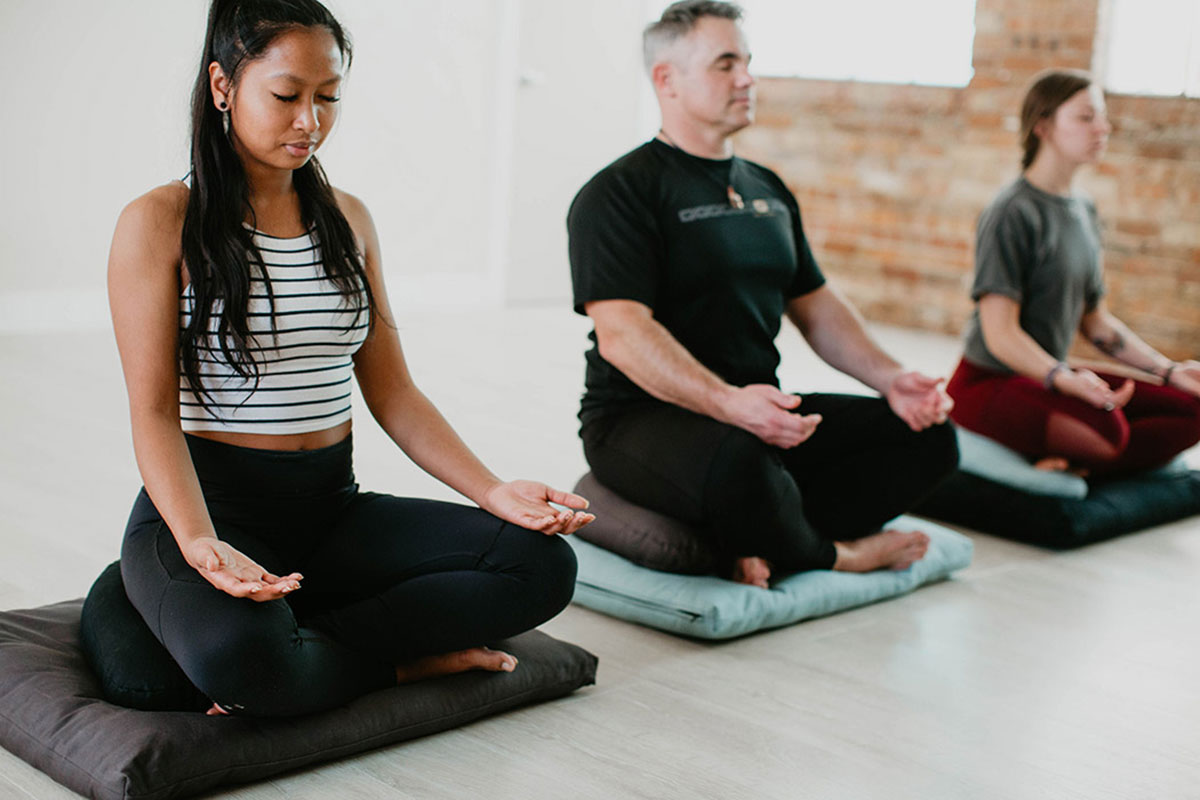
The phrase “asana” means “seat.” It actually refers back to the sitting posture. The unique objective of training yoga asana was to assist the physique for the pains of sitting meditation. This contains not solely the bodily physique, however the physiological programs as effectively. Particularly necessary is the nervous system.
After I studied in India with B.Ok.S. Iyengar, one factor he stated caught in my thoughts and has helped information my follow. He stated that we follow asana to create a peaceable, calm atmosphere for the thoughts. When the physique is comfortable, the thoughts can extra simply be comfortable.
Three of the 196 yoga sutras describe asana. All are within the second pada, or chapter. Right here they’re (from Alistair Shearer’s translation):
- 2.46: The bodily posture must be regular and comfy.
- 2.47: It’s mastered when all effort is relaxed and the thoughts is absorbed within the Infinite.
- 2.48: Then you’re not upset by the play of opposites.
So let’s break this down. As with different posts on this Yoga 101 sequence, my descriptions right here shall be brief and candy. If you wish to delve deeper, choose up my e book, Aware Yoga, Aware Life.
Sutra 2.46: Alistair Shearer’s translation makes use of the outline “regular and comfy.” Different translations of this sutra describe asana as “agency and mushy,” “regular and straightforward,” and different such reverse qualities. For me, this says that balancing effort is the important thing. Steadiness implies a power, stability and dedication. Consolation implies ease and calm. Steadiness with out consolation can create pressure and tightness. Consolation with out steadiness can result in sloth and heaviness. So we stability the 2 in each pose.
Sutra 2.47: This sutra is essential for understanding the intention—and the ability—of asana follow. Discover that it doesn’t outline mastery by way of what our our bodies can or can’t do. There’s nothing about pushing additional or mastering fancy poses. Actually, it implies the other. Not like aggressive sports activities, the place we continuously push our edge, asana asks us to loosen up our effort. Once we can loosen up effort in our poses, as a substitute of “doing” the pose, we begin to “be” the pose. In that present-moment expertise of the interior course of, our minds are absorbed within the Infinite. Anybody, with any physique kind or bodily capacity, can obtain mastery in asana.
Sutra 2.48: Flexibility, power, tone, stress reduction—these are the qualities most frequently listed as the advantages of asana follow. And it’s true; common practitioners typically report these advantages. However these are merely facet advantages to the actual objective of follow: to have the ability to meet the ebb and circulation of our lives with equanimity. Once we follow with steadiness and luxury in thoughts, we stability our nervous system and domesticate mind-body calm. Once we loosen up effort and let go into the moment-by-moment expertise of asana, our minds grow to be spacious and clear. By creating this state, we’re capable of strategy our lives’ ups and downs with extra grace. I don’t learn about you, however I believe that is a rare declare for a bodily follow.
So by way of the instrument of our personal bodily our bodies, we will contact into spacious equanimity that expands outward into our on a regular basis lives off the mat. That is the aim of asana. It prepares our body-mind for meditation, however it additionally helps us combine the meditative state into all our bodily pursuits.
About Charlotte Bell
Charlotte Bell found yoga in 1982 and commenced instructing in 1986. Charlotte is the creator of Aware Yoga, Aware Life: A Information for On a regular basis Follow and Yoga for Meditators, each printed by Rodmell Press. Her third e book is titled Hip-Wholesome Asana: The Yoga Practitioner’s Information to Defending the Hips and Avoiding SI Joint Ache (Shambhala Publications). She writes a month-to-month column for CATALYST Journal and serves as editor for Yoga U On-line. Charlotte is a founding board member for GreenTREE Yoga, a non-profit that brings yoga to underserved populations. A lifelong musician, Charlotte performs oboe and English horn within the Salt Lake Symphony and people sextet Purple Rock Rondo, whose DVD gained two Emmy awards.