
In 2015, I settled in on the Springfield, Massachusetts, headquarters of Merriam-Webster, America’s most storied dictionary firm. My undertaking was to doc the formidable reinvention of a traditional, and I hoped to get some definitions of my very own into the lexicon alongside the way in which. (A favourite early drafting effort, which I couldn’t consider wasn’t already included, was dogpile : “a celebration wherein contributors dive on high of one another instantly after a victory.”) Merriam-Webster’s overhaul of its signature work, Webster’s Third New Worldwide Dictionary, Unabridged—a 465,000-word, 2,700-page, 13.5-pound doorstop revealed in 1961 and by no means earlier than up to date—was already in full swing. The revision, which might be not a hardback ebook however an online-only version, requiring a subscription, was anticipated to take a long time.
Not lengthy after my arrival, although, every little thing modified. Web page views had been declining for Merriam-Webster.com, the corporate’s free, ad-driven income engine: Tweaks to Google’s algorithms had punished Merriam’s search outcomes. The corporate had all the time been lean and worthwhile, however the monetary hit was actual. Merriam’s mum or dad, Encyclopedia Britannica, was dealing with challenges of its personal—who wanted an encyclopedia in a Wikipedia world?—and ordered cuts. Merriam laid off greater than a dozen staffers. Its longtime writer, John Morse, was compelled into early retirement. The revision of Merriam’s unabridged masterpiece was deserted.
Name it the paradox of the fashionable dictionary. We’re in a golden age for the examine and appreciation of phrases—a time of “meta consciousness” of language, as one lexicographer put it to me. Dictionaries are extra accessible than ever, out there in your laptop computer or cellphone. Extra folks use them than ever, and dictionary publishers now possess the digital wherewithal to intently monitor that use. Podcasts, newsletters, and Phrases of the 12 months have popularized neologisms, etymologies, and utilization traits. In the meantime, analytical software program has revolutionized linguistic inquiry, enabling better understanding of the methods language works—when, how, and why phrases get away; the particular contexts for expressions and idioms. And all of that was true lengthy earlier than the rise of AI.
However these advances are additionally strangling the enterprise of the dictionary. Definitions, skilled and beginner, are a click on away, and most of the people don’t care or can’t inform whether or not what pops up in a search is knowledgeable analysis, crowdsourced jottings, scraped information, or zombie web sites. Earlier than he left Merriam, Morse advised me that legacy dictionaries face the identical rising fashionable mistrust of conventional authorities that media and authorities have encountered.
Different massive names in American lexicography had been already receding. In 2001, a decade after releasing an version dubbed the “politically appropriate dictionary” for its inclusion of womyn, herstory, waitron, and extra, Random Home deserted dictionary making altogether. Webster’s New World Dictionary cycled by company house owners till its final version, in 2014. The American Heritage Dictionary, revealed in 1969 to problem Merriam’s Third, is an sometimes up to date shell of its legendary self.
By the beginning of this decade, the once-competitive American dictionary enterprise was primarily down to 2 gamers: Merriam-Webster, with its 200 years of custom and model recognition, and Dictionary.com, whose founders, 30 years in the past, beat Merriam to the URL by a couple of weeks. After it was acquired in 2008 by the media and web big IAC, Dictionary.com’s small editorial employees had innovated. After I visited its workplaces in 2016, the corporate’s verticals for slang, emoji, memes, and phrases associated to gender and sexuality had been sturdy, and its periodic dictionary updates had been fashionable and substantial—a batch of entries included superfood and clicktivism. The corporate reportedly had greater than 5 billion annual searches within the mid-2010s, and in 2018 was among the many web’s 500 most-visited web sites.
In 2018, Dictionary.com was bought by the mortgage-industry titan (and Cleveland Cavaliers proprietor) Dan Gilbert’s firm Rock Holdings—apparently simply because Gilbert was a fan of dictionaries. He took a private curiosity within the undertaking, and for a couple of years, it appeared just like the digital way forward for the lexicon was at hand. The road inside the corporate was that Gilbert wished “to personal the English language.” And he did appear genuinely within the work of the dictionary. “Now and again he would ask a query {that a} reader would possibly ask,” John Kelly, a longtime Dictionary.com editor, advised me. As an example, Gilbert was into excessive climate, Kelly stated, and had subordinates transient him on phrases equivalent to bombogenesis. When Rock Holdings’ mortgage and monetary corporations went public in 2020, Dictionary.com remained privately held, shielding the location from shareholder pressures.
In 2023, Dictionary.com employed three full-time veteran lexicographers—together with Grant Barrett, a co-host of the public-radio present A Manner With Phrases, and Kory Stamper, a former longtime Merriam-Webster editor and the creator of the memoir Phrase by Phrase—to bolster a workforce of a few dozen freelancers. The objective was to modernize the dictionary, which was a big enterprise. Dictionary.com was based mostly totally on The Random Home Unabridged Dictionary of the English Language (revealed in 1966, up to date in 1987), which was based mostly on The New Century Dictionary (revealed in 1927), which was based mostly on The Century Dictionary (revealed in 1889), which was based mostly on The Imperial Dictionary of the English Language (revealed in 1847). Among the entries had been greater than 100 years previous.
The lexicography workforce revised ceaselessly seen phrases equivalent to concept and speculation, which generate plenty of site visitors at the beginning of the varsity yr. It enhanced entries with new pronunciations, etymologies, and various senses, equivalent to a brand new adjectival use of mid (“mediocre, unimpressive, or disappointing”). It eliminated sexist and archaic language and diversified names in instance sentences. (“ ‘John went to high school,’ ” Barrett advised me. “Why not Juan or Juanita or Giannis? This can be a multicultural society.”)
Barrett designed a studying program to assist flag rising lexical gadgets and turbocharge additions, tripling the quantity of recent phrases added within the web site’s periodic updates over the course of a yr. A February 2024 rollout included Barbiecore, mattress rotting, sluggish vogue, vary anxiousness, and enshittification, which the American Dialect Society had chosen a month earlier as its 2023 Phrase of the 12 months. (Of these phrases, solely enshittification has since been added by Merriam, and solely to a brand new slang portal, not the official dictionary.) The lexicography workforce was revising a database to extra rapidly replace entries and publish them on social media, and growing a synonym-based recreation. It was coaching new lexicographers.
Dictionary.com couldn’t match Merriam’s historical past or popularity. As a substitute, the corporate was attempting to place itself to “seize language on the tempo of change,” to be “hipper and extra experimental, but additionally rigorous AF,” Kelly stated. (Dictionary.com added the slang initialism for as fuck ; Merriam nonetheless has not.)
The piecemeal efforts improved the dictionary’s high quality and funky quotient. Barrett additionally beloved the work: He was surrounded by colleagues who cared about language and the way it was introduced, verbally and visually. For a time, Barrett might plug his fingers in his ears and tune out the sobering actuality: Though he and his colleagues had been getting paid properly, “the dictionary enterprise was crumbling,” he stated. “So trip it ’til the wheels fall off. And the wheels fell off.”
Not lengthy after Rock Holdings took over, the {industry} grew more difficult. Google’s “information packing containers” had been hogging the highest of search pages with definitions licensed from the British dictionary writer Oxford, together with synonyms, antonyms, and, finally and predictably, AI-generated summaries of phrases’ meanings. The proprietary muddle pushed down traditional-dictionary hyperlinks, and Dictionary .com’s site visitors fell by about 40 %. On the identical time, the pandemic drained promoting income. The positioning tried to stanch the decline with extra adverts, solely to create a worse person expertise.
Dictionary.com rolled out a Okay–12 on-line tutoring service, AI writing software program, and different training merchandise. None of it aligned with a dictionary’s mission, and none of it labored, staffers stated. Then, as rates of interest rose, income at Gilbert’s core mortgage enterprise plunged, leading to practically $400 million in losses. Even for a billionaire who was within the comparatively low-budget dictionary enterprise much less for revenue than for enjoyable, the underside line mattered, and the stress to become profitable and lower prices was inescapable.
In April 2024, Rock Holdings introduced that it had offered Dictionary.com to IXL Studying, the proprietor of Rosetta Stone, Vocabulary.com, and different on-line ed-tech manufacturers. Inside a month, IXL laid off the entire dictionary’s full-time lexicographers and dumped most of its freelancers. Together with non-lexicography employees, Dictionary.com had began 2024 with about 80 staff. After the sale, solely a handful remained. (A consultant for IXL stated that the corporate retained a few of the freelancers, introduced in its personal lexicographers, and now has a employees bigger than it was on the time of the acquisition.)
When he misplaced his job, Barrett wasn’t bitter, or shocked. Dictionary.com hadn’t aspired to have a full employees within the custom of the books on which it was based mostly, he stated. It didn’t have Merriam’s advertiser base, print backlist, or historic mission to protect, shield, and outline American English. Barrett understood its extra circumscribed undertaking. “Dictionary content material is pricey,” Barrett stated. “Simply the price of lexicographers—persons are costly, and the output is low. It is vitally tough to justify that only for the sake of completism. You’ll by no means have sufficient employees to maintain up. Individuals are too productive within the creation of language.”
It’s onerous to know what future enterprise mannequin would possibly save the {industry}. Getting swallowed by a tech big anticipating hockey-stick progress has proved untenable. A billionaire keen to let the dictionary simply be the dictionary—a self-sustaining firm with a modest employees performing an outsize cultural job which may not all the time be worthwhile—seems much less possible after Dan Gilbert’s foray. A grand nationwide dictionary undertaking—some collaboration amongst authorities, non-public, nonprofit, and tutorial establishments—feels just like the Platonic best. However with universities and mental inquiry underneath assault in 2025, I’m not holding my breath.
At Merriam-Webster, the usual capitalist mannequin is working, a minimum of for now, as is its hybrid print-digital method. The writer has rebounded from its mid-2010s struggles. It was a social-media darling through the first Trump administration, racking up likes and retweets for its smart-alecky and politically subversive social-media persona. (When Donald Trump tweeted “unpresidented” as an alternative of “unprecedented,” the Merriam account responded: “Good morning! The #WordOfTheDay is … not ‘unpresidented’. We don’t enter that phrase. That’s a brand new one.”) Britannica invested in software program, {hardware}, and people to allow Merriam to higher navigate Google’s algorithms. Merriam added a phalanx of video games, together with Wordle knockoffs and a dictionary-based crossword, to draw and retain guests.
Merriam has outlasted a protracted line of American dictionaries. However loads of family media names have been humbled by the shifting habits of digital customers. Even earlier than Google’s AI Overview started taking clicks from definitions written by flesh-and-bone lexicographers, the trajectory of the {industry} was clear.
After Merriam shut down its on-line unabridged revision, I caught across the firm’s 85-year-old brick headquarters, reporting and defining. I ultimately drafted about 90 definitions. Most of them didn’t make the lower. However a handful are enshrined on-line, together with politically charged phrases equivalent to microaggression and alt-right, and eccentric ones equivalent to sheeple and, sure, dogpile.
Whereas I’m pleased with these small contributions to lexicography, my wanderings by dictionary tradition satisfied me of one thing much more vital: the pressing want to avoid wasting this slowly fading enterprise. Twenty years in the past, an estimated 200 full-time industrial lexicographers had been working in the US; at present the quantity might be lower than 1 / 4 of that. At a time when contentious phrases dominate our conversations—assume rebel and fascism and pretend information and woke—the necessity for dictionaries to chronicle and clarify language, and function its watchdog, has by no means been better.
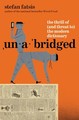
This text was tailored from Stefan Fatsis’s new ebook, Unabridged: The Thrill of (And Risk to) the Trendy Dictionary. It seems within the October 2025 print version with the headline “Whither the Dictionary?”
By Stefan Fatsis
If you purchase a ebook utilizing a hyperlink on this web page, we obtain a fee. Thanks for supporting The Atlantic.