
[Editor’s Note: This article was written by Michael Donovan, a New York City-based musician, runner, and soon-to-be law student. His favorite shape is the torus.]
It’s 8 a.m. over Val Rosandra, Italy, and daybreak doesn’t break. It seeps — day by the night time — exposing a system in the midst of issues.
It exposes water in the midst of an countless debate with limestone.
It exposes wind, La Bora, it’s known as, in the midst of a stout burst, leaving water for land.
It exposes a metropolis, Trieste, in the midst of waking up.
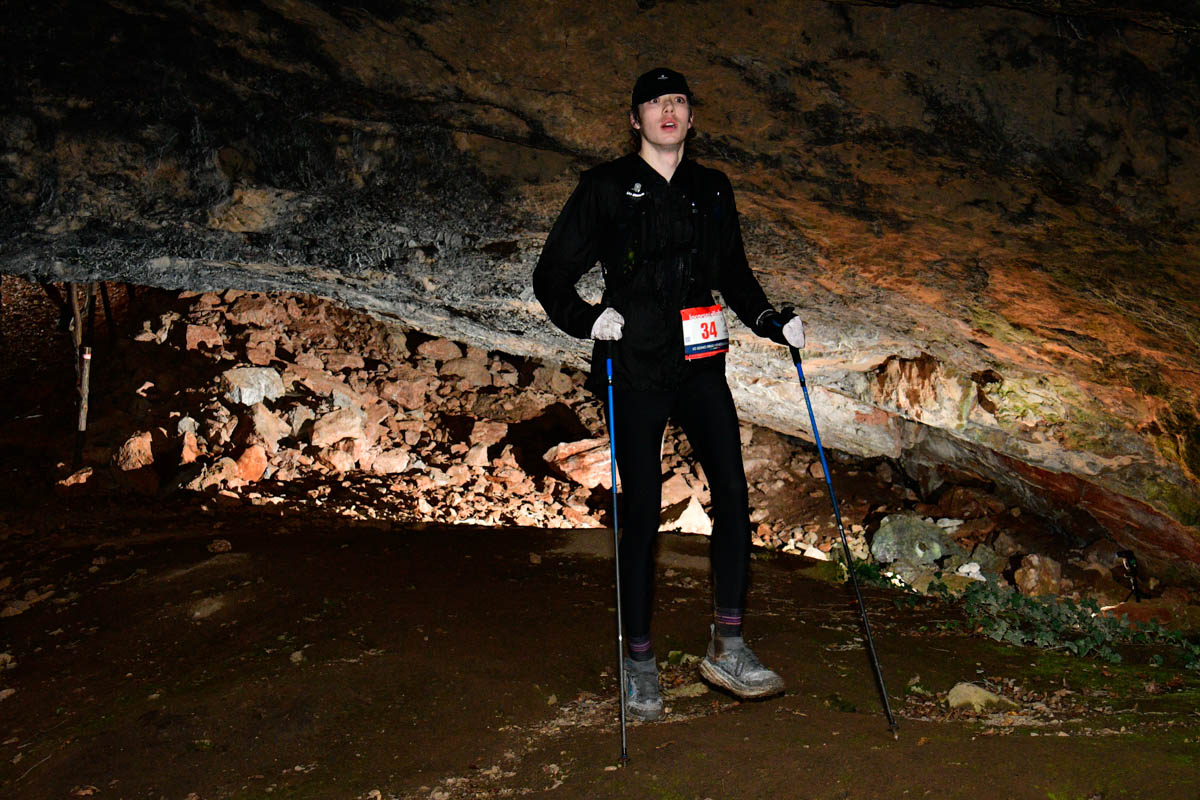
And it exposes me, a runner, in the midst of an extended footrace (see Determine 1) (1): midway round what locals name the Karst, what Jan Morris calls “The Capital of Nowhere (2),” and what I name Nowhere.
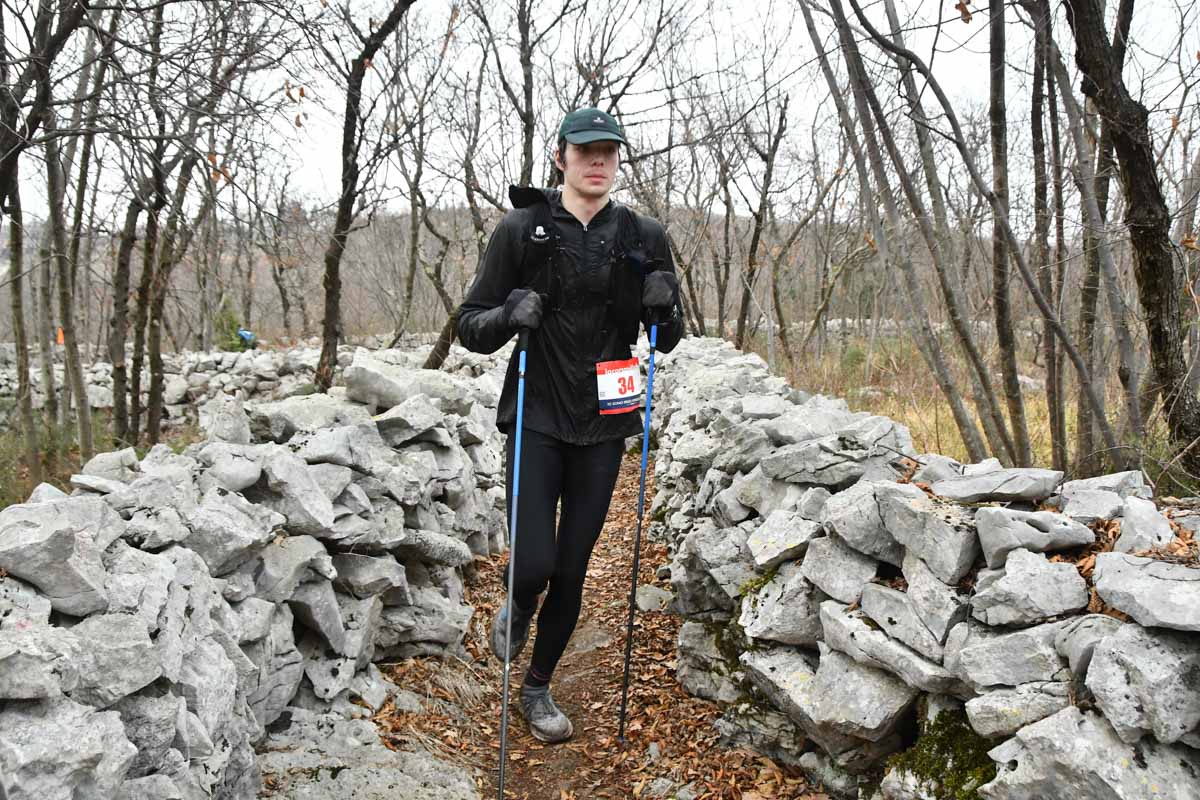
Determine 1. The creator Michael Donovan racing the 2025 La Corsa Della Bora in Italy. Photograph courtesy of Michael Donovan.
I wasn’t at all times in the midst of Nowhere. I needed to begin Someplace. All of us do.
For the water, Someplace was outer area. They got here as a crew of playful molecules whose meteor crash-landed onto a brand new dwelling right here on Earth. For La Bora, Someplace was the water, an enormous oceanic vary proved the proper place to select up pace. For Trieste, Someplace was an Illyrian outpost. They figured an countless debate between water and limestone might deter would-be invaders. It did for some time.
And for me, Someplace was eight hours in the past, at midnight, in a village known as Sistiana, north of Trieste. It was there that my fellow runners and I discovered ourselves huddled in a beachside locker room, not-so-patiently awaiting our race director’s parting phrases.
Some stood nonetheless. Others shook.
I don’t keep in mind what I did earlier than the race director shouted, “One thing! And one thing else! One thing essential! About security, most likely!”
Who is aware of? I don’t converse Italian, however I did handle to catch his closing “Buona Fortuna!” That was my cue to cross the beginning line, out of Someplace, into … Nowhere.
Giving Sufficient
Nowhere has been largely darkish up till now.
Eight hours later, it nonetheless doesn’t appear like a lot of something. That’s to not say the panorama’s drab (see Determine 2).
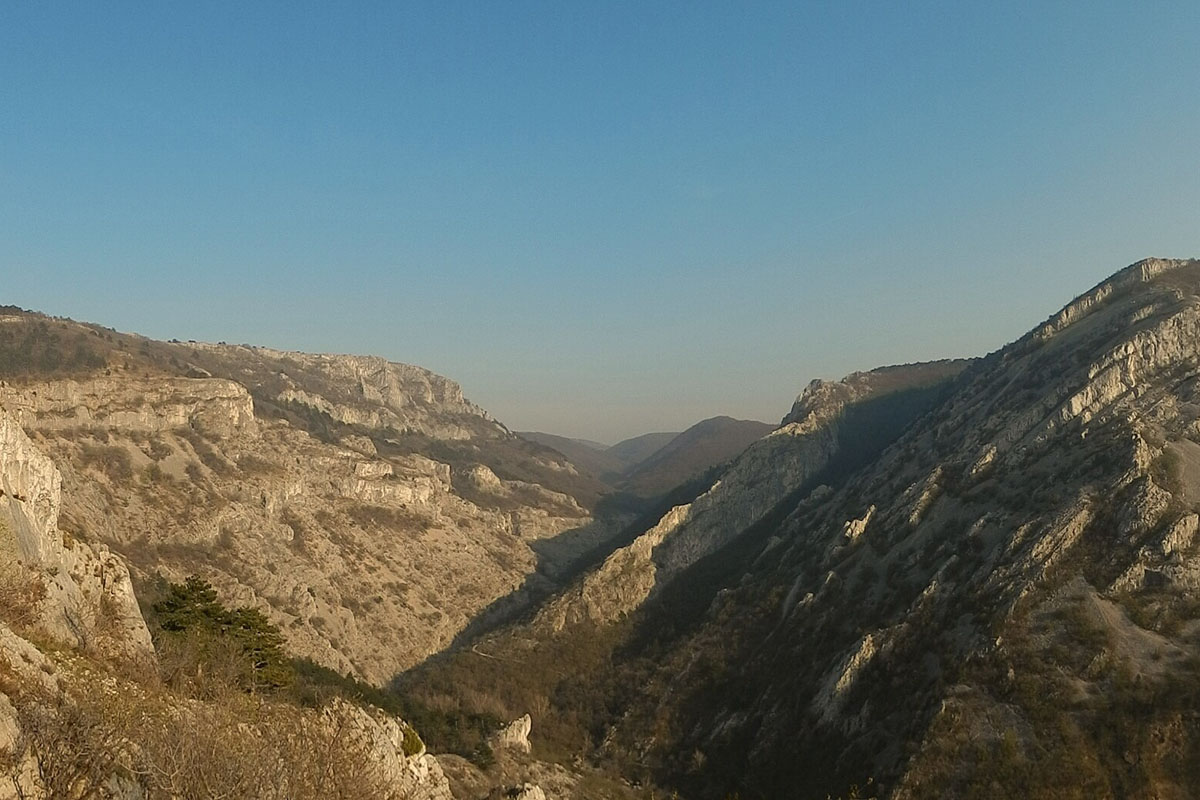
Determine 2. Val Rosandra, Italy. Photograph: Andrea Skerlava
No, I’ve run into a distinct situation altogether. My eyes have gone on strike.
It’s my fault, actually. I did not fulfill their most simple request: “Eat sufficient, at all times (3).” And look, I get it.
The physique makes use of vitality. It makes use of extra vitality when it runs. Solely meals, taken steadily, can present this vitality. Therefore, when a runner runs so much, they must eat so much. They want loads of vitality. Meals is gas, or no matter. Ultrarunning is an consuming competitors, one other saying goes.
Energy to you, eyeballs. Decelerate. Resist. You understand the drill.
Their efforts remind me of one thing David Roche wrote for “Path Runner Journal.”
We are able to solely pursue a “grown-ass” purpose if we give our our bodies “sufficient.” If we count on to do one thing gnarly — similar to attempting to complete a 103-kilometer race by the center of Nowhere, simply as I’m now — we’d greatest be ready to devour the energy required to perform such a process. In any other case, we’d be asking an excessive amount of of our organs. Solely by giving them ample working situations can we impel them to perform the duty at hand: “ripping bones and viscera to shreds” on the trail to glory.
“’Sufficient’ permits for nuance,” Roche concludes. And from nuance: potential.
It is smart then that I can now not breathe, transfer, stand, or see with any form of alacrity, that it’s even turning into tough to separate one factor from one other. It’s not simply my eyes, however all of my organs that are actually on strike. They’re holding my nuance hostage, reversing my individuating course of till I give them what they want.
I maintain out, although, which is why rocks mix into soil, soil bleeds into the grass, grass decays into sheep, and all the pieces congeals into soup, the considered which makes me much more hungry.
Offended too. Hangry? I’m hangry as a result of I might’ve had precise soup with the girl on the Contovello avenue nook; or pizza, sweet, and Coke to the tune of “99 Luftballoons” with these children within the Obelisco piano room; or fruits, greens, and prosciutto crudo with the person on the Bognoli osmize. I used to be roaming by a land of loads, but it surely wasn’t sufficient for me (see Determine 3).

Determine 3. La Corsa Della Bora, by the creator’s eyes.
Pace
I solely wished pace.
Pace relates time to distance: specifically, how a lot distance will be coated over time. As a racer, it’s my god-given purpose to cowl this distance in a smaller period of time than any of my counterparts. I would like pace, and I’ll pay for it, no matter the fee.
Some 120 to 140 grams of carbohydrate per hour, Roche chimes in (4). Generally extra.
I fear now, taking a be aware from Paul Virilio (5), that my want for pace accommodates inside it a darkness, and that it’s come to rear its snarling head.
“The invader’s efficiency resembles that of his athletic counterpart,” Virilio warns. Their purpose might sound small, innocent at first: “Olympic champions whose data progressed by hours, then by seconds, then by fractions of seconds.”
However with every incremental shift, the speedfreak will get nearer to their restrict: “The higher they carried out (the extra fast they grew to become), the extra pitiful have been the advances they obtained, till they may solely be observed electronically.”
“In the future the champion will disappear into the bounds of [their] personal report, as is already recommended by the organic manipulation of which [they are] the thing, and which resembles the strategies of synthetic medical survival granted the terminally ailing.”
I’ll spare you the strains the place I contextualize all this within the present political second. “I don’t know, stated Austerlitz, what all this implies (6).”
However I do know that I’m now searching for one other approach ahead (see Determine 4), one which doesn’t require pace as a purpose. I’ve no real interest in turning into the “closing symbolic manifestation of the moto-power of dwelling our bodies (7).” I simply need to hold going.
A Needing Machine
It’s turning into clear to me that if I need to hold going, I received’t give you the option to take action alone. My very own ideas, whereas ample, have proven themselves to do extra hurt than good.
I look to my working buddy. He’s a 40-something Zen grasp, extra inclined towards consistency than pace. Perhaps he may also help.
I’d ask him immediately, however non so parlare Italiano!
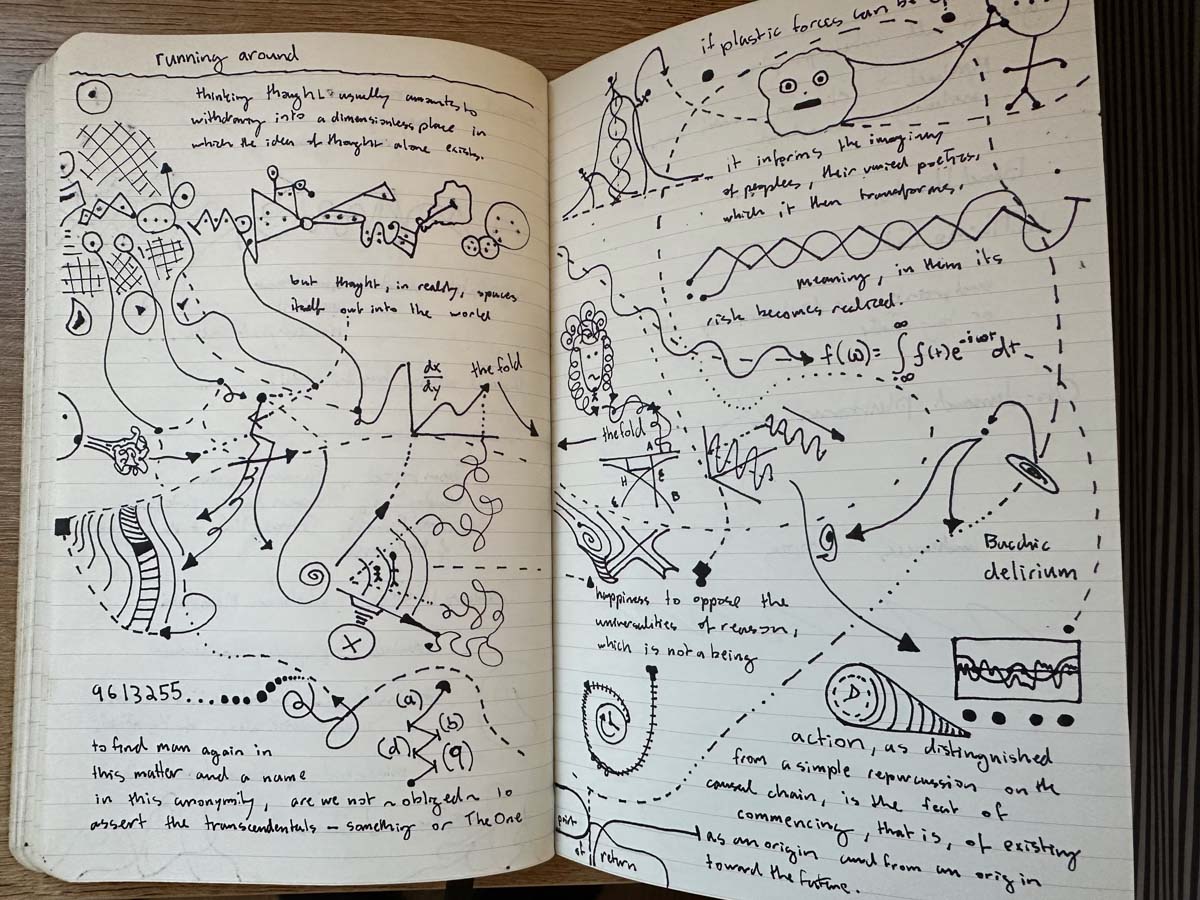
Determine 4. The creator’s path by Nowhere.
So, I hang-out him as an alternative. I’ve been haunting him for some time, in truth: trailing him for hours on finish, by the darkish of the night time, throughout cities and cities, up mountains, into valleys. I watch his each transfer. I copy — as all good buddies do.
I do that as a result of to be a pal is to be a needing machine (8). “Needing machines are binary machines, obeying binary legislation or algorithm:” 0. He stops. 1. He goes. 0. He eats. 1. He runs. “One machine is at all times coupled with one other.”
As a needing machine, I don’t must assume. I solely must cease when he stops, go when he goes, eat when he eats, and so forth. What’s extra: as a needing machine, I could be a ghost. And it’s not so unhealthy to be a ghost (9). It’s good to not fear about ideas or loneliness or something like that. To as an alternative hang-out, ceaselessly, constantly.
Such ghostliness would possibly even result in a extra “productive synthesis, the manufacturing of manufacturing … inherently connective in nature.” It has the potential to attach us with each other and with our ecosystem. There’s, nonetheless, a catch.
“The primary machine is in flip related to a different whose move it interrupts or partially drains off (10).” This course of is critical and irreversible. Oops. It’s not my fault we’ve amassed a form of vitality that our programs can’t assist however dissipate. It’s the legislation (11)! What else can I do however fulfill my obligation to maneuver, dutifully, from sizzling to chilly?
My solipsistic temper returns.
If “each ‘object’ presupposes the continuity of move,” I conjecture (in my very own, extremely readable phrases — see Determine 5) (12), it follows that “every organ-machine interprets your entire world from he perspective of its personal flux, from the viewpoint that vitality flows from it: the attention interprets all the pieces — talking, understanding, shitting, fucking — by way of seeing.”
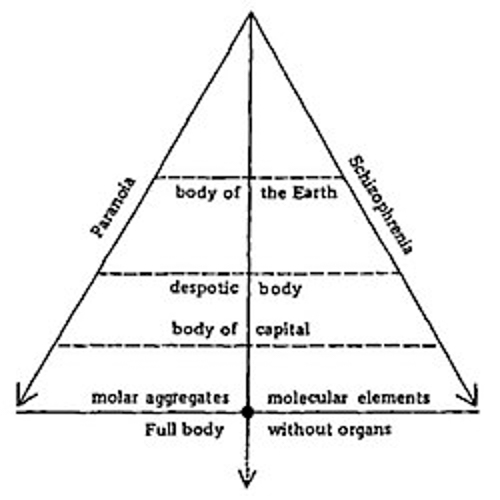
Determine 5. The physique with out organs. Picture: “Anti-Oedipus: Capitalism and Schizophrenia” by Gilles Deleuze and Felix Guattari
Listening to this, La Bora slaps me within the face.
“A reference to one other machine is at all times established, alongside a transverse path,” they reply (in their very own, extremely readable phrases) (13).
The Swerve
I attempt to hold this in thoughts as I proceed my fade. The place can I am going from right here? And the way?
I wallow, however La Bora smacks me once more, this time sending me spiraling towards “ontogenesis” however “in reverse (14).” This slap shatters my machinic mess of a self right into a trillion tiny items. I scatter. I compress. I get smaller and smaller and smaller and smaller till I fold into myself and meet the swerve.
The swerve? It was Lucretius who gave us the swerve (15), although he known as it clinamen. The idea additionally appeared in Karl Marx (16), later in Virginia Woolf (17), and it has since discovered a brand new life within the philosophy of Thomas Nail (18). However I like to consider the swerve by the work of Paul Klee, who implied that all of it begins with some extent (see Determine 6) (19).
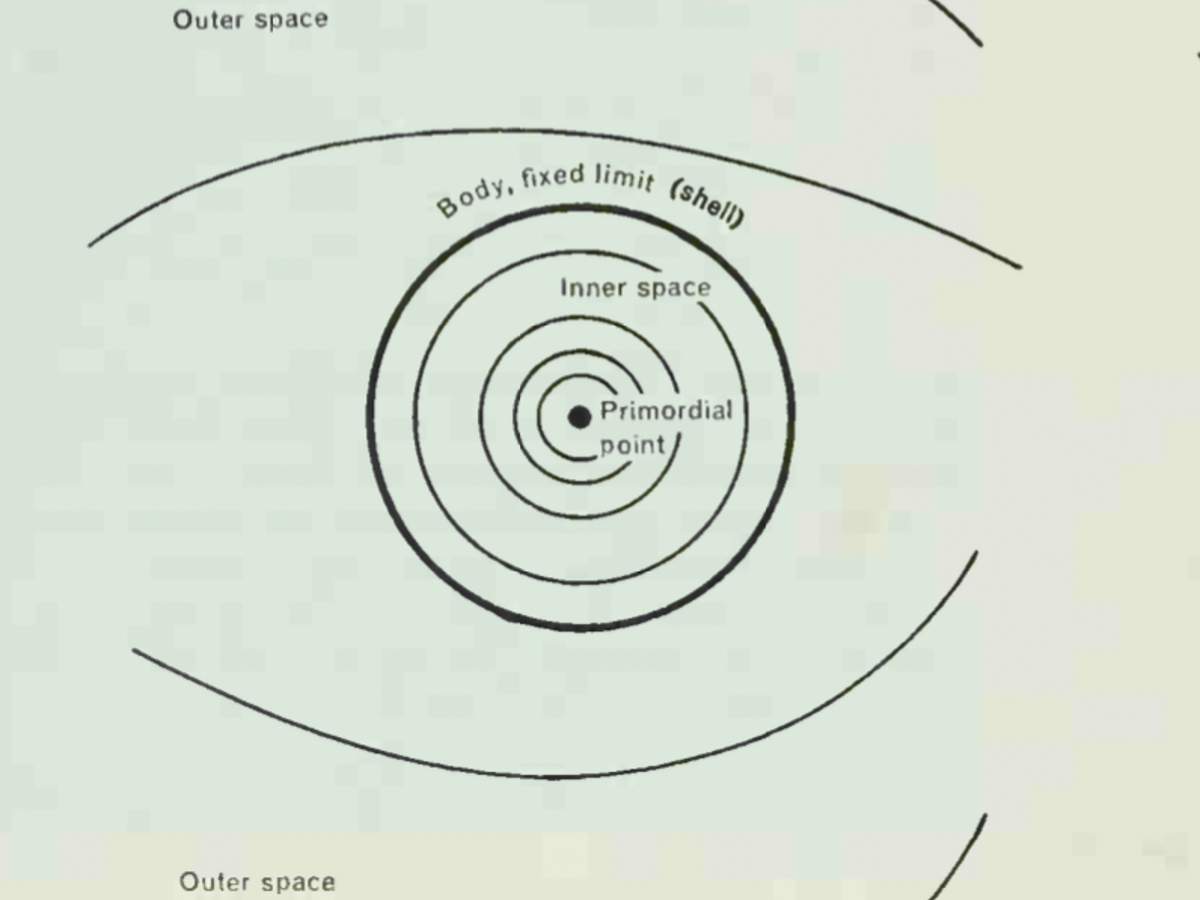
Determine 6. The primordial level. Picture: “Notebooks Vol. 1: The Considering Eye” by Paul Klee
This level, just like the daybreak sky, “can solely be gray.”
As soon as established, a “level in chaos” (see Determine 7) can imbue its inherent discomfort (infinite folding) with the “concentric character of the primordial.” It will possibly instantiate “the cosmogenetic second!” Fairly neat, proper?
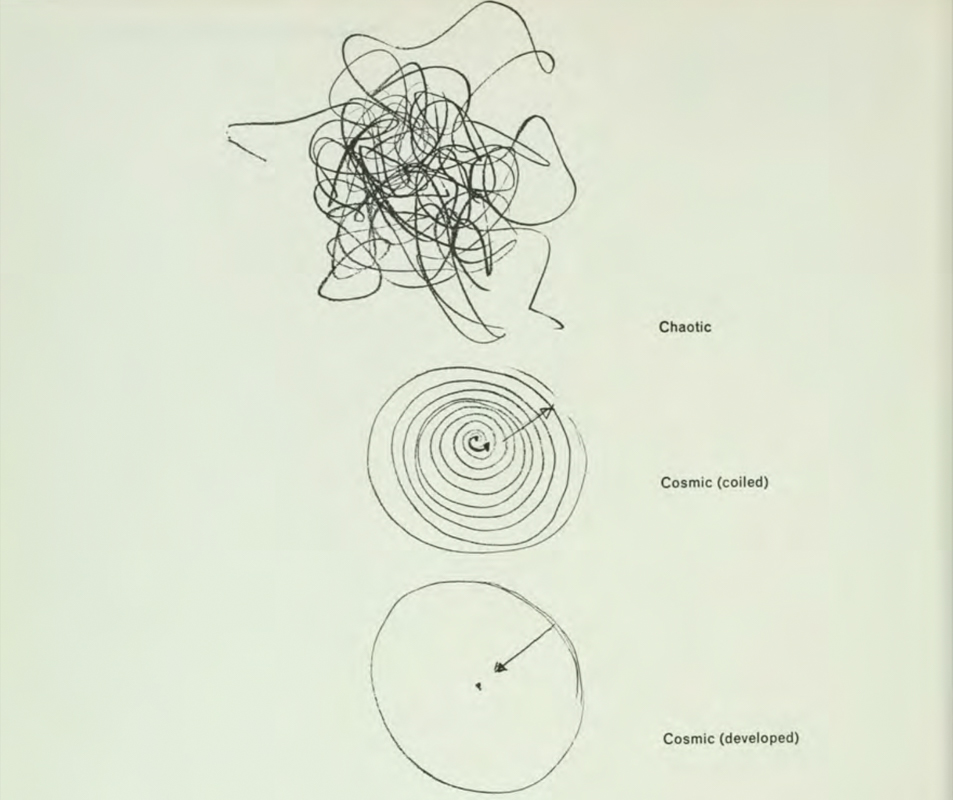
Determine 7. Level in Chaos. Picture: “Notebooks Vol. 1: The Considering Eye” by Paul Klee.
I feel so. However there’s, after all, one other catch.
Any occasion of “cosmogenesis” should essentially be accompanied by a “potential vitality,” which attracts all generated matter again towards the preliminary level (20). What a drag!
This opposition between centripetal and centrifugal cosmogenetic forces, taken collectively, represents what many large thinkers have known as distinction. And, considerably sarcastically, these thinkers have developed two opposing methods to consider distinction as such.
Hegelian Distinction
The primary is Hegelian (see Determine 8): distinction is at all times from one thing, i.e., lack (21).
I don’t like this as a result of it requires lack — it means I’ll at all times lack one thing — and that I’ll inevitably run into the issue of not having sufficient, it doesn’t matter what I do.

Determine 8. Nervous Georg Wilhelm Friedrich Hegel. Picture: Lazarus Gottlieb Sichling/After Friedrich Julius Ludwig Sebbers
If I had sufficient, for Hegel, then I wouldn’t actually have something. My life drive wouldn’t even exist. He thinks there must be one thing extra. One thing totally different. One thing we wish however can’t have. One thing to maintain us going.
Serious about the idea of distinction on this approach additionally has a nasty tendency towards locking its practitioners in a sample whereby they change into “infinite receptacles for consumption (22).” Have you ever ever been an “infinite receptacle of consumption?”
I’ve. It sucks.
Deleuzian Distinction
That’s why I’d a lot relatively assume Deleuzian distinction: “distinction” that’s “willpower as such” (see Determine 9) (23).
Determine 9. Sassy Gilles Deleuze. Picture: Tintinades, CC
This sort of distinction — which generates our minds by matter together with all the pieces else in a single fluid and steady motion — makes no try in any way to pit any form of “willpower” towards one other. As an alternative, it permits all determinations to work collectively inside a single “harmonious organism,” playfully portray historical past, which it defines as little greater than “some extent between dimensions (24)” onto an indeterminate future.
I take consolation in this type of distinction as a result of it implies I have already got sufficient. Positive, I nonetheless can devour. I would even must devour, particularly if I’m pushed by want, because it have been. However such consumption — and the need for it — wouldn’t be a response to lack. It might be a factor in and of itself. It might be basic. It might be some extent: the swerve.
“To this prevalence corresponds the thought of a form of starting (25).”
New strains lengthen outward: I can go about strolling, leaping, working, “shifting freely” (see Determine 10). I can embrace the notion that “all the pieces (the world) is of a dynamic nature; static issues make their look solely at sure components of the universe (26).”
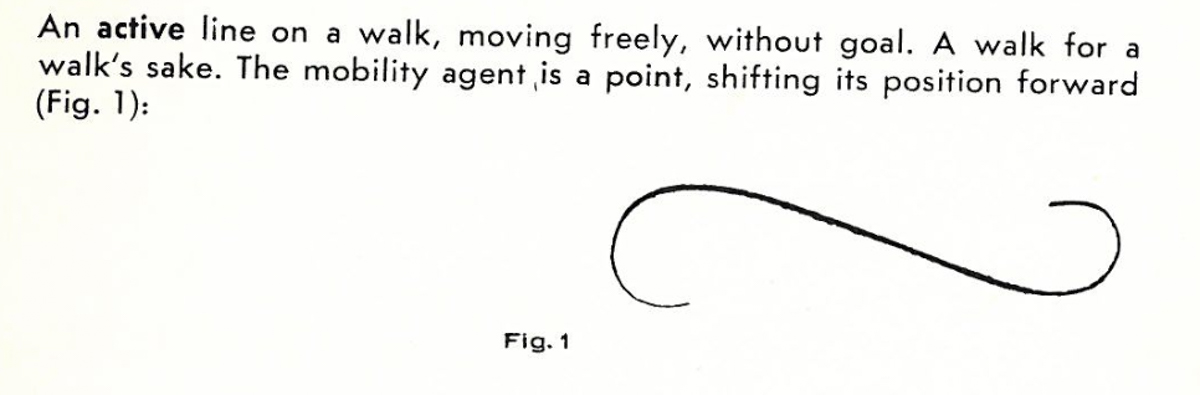
Determine 10. Picture: “Pedagogical Sketchbook” by Paul Klee
I can dive into the fleeting nature of my “faltering existence on the outer crust of the Earth” as a result of I do know that “strictly talking, all the pieces has potential vitality directed in direction of the centre of the Earth (27).” And that this vitality could possibly be distinction. And that this distinction could possibly be life.
To consider this type of distinction, I would like solely flip myself away from a “imaginative and prescient of nature that may be common, deterministic, and goal inasmuch because it accommodates no reference to the observer, full inasmuch because it attains a degree of description that escapes the clutches of time (28)” and switch myself towards a imaginative and prescient of nature as play.
Center of Issues
Body adjusted accordingly, I conclude that I’m not really working from something.
I’m totally different (29), and I run as a result of it places me proper in the midst of issues. It places me in an indeterminate place the place the strain between previous and current, cold and hot, inward and outward, conducts a phenomenal and self-organized symphony.
On this place, “time is the factor (30)” — however don’t be a “Tár” — and time strikes all the pieces to the meter of its unsteady beat.
The Karst
I stand immobile for a second, relieved.
I additionally surprise what this new distinction might need to say about Jan Morris’s grounding assumption: “Trieste can’t escape the Karst (31).”
It’s true their “hills of queerness” — “so obsessive about stone” — have at all times been capable of take up the rise and fall of empires, the creation and destruction of borders, the evisceration of life into their deep temporal chasms. “Time is the factor.”
However is it additionally true that the Karst can’t escape Trieste?
Maybe I might argue that the Karst really wished their stones to change into homes, their hills to be planted with meals, and their caves to be crammed with cheese. However, on that very same token, I’m undecided I might say the identical about their stones turning into trenches, their hills turning into looking grounds, and their caves turning into crammed with lifeless bones.
Provided that the Karst can’t escape Trieste would this latter line of questioning make any sense. It might additionally level us towards the belief that Trieste and the Karst are extra than simply an inseparable pair. They’re one and the identical: ecological equivalents, interdependent to a fault. Underneath this equivalency, each darkness and light-weight (their perpetual opposition, the gray between them) belong not simply to the Karst or Trieste however to each concurrently. This may additionally imply that every one this darkness and light-weight and all the pieces in between belong to me as properly. I’ve acquired no say within the matter. I can’t escape the Karst.
La Bora blows once more, and I sing to myself:
“I’ll by no means know which solution to move
Set a course that I don’t know
I’ll by no means know which solution to move
Set a course that I don’t know
The wind’s blowing on my face (33).”
It comforts me as I watch the dawn (34), give the sheep my greatest, and permit myself to be moved.
For eight extra hours, I’ll go down mountains, between timber, by extra cities and cities, up onto cliffsides, again down them once more, by the trenches even, at all times shifting, simply sufficient, and fortunately so (see Determine 11).
Determine 11. Don’t name me an allegory. Photograph courtesy of Micahel Donovan.
Notes/References
- La Corsa Della Bora – S1 Path 103k.
- Morris, J. (2006) “Trieste and the that means of nowhere.” CNIB.
- Roche, D. (2023) “The Science of Low Vitality Availability and Efficiency.” Path Runner Journal.
- He wants to sit back.
- Virilio, P. (1977) “Pace and Politics: An Essay on Dromology”
- Sebald, W.G. (2001) “Austerlitz.” Hanser.
- He additionally wants to sit back.
- Deleuze, G., Guattari, F. (1983) “Anti-Oedipus: Capitalism and Schizophrenia.” College of Minnesota Press.
- Rosenstock, J. (2016) “To Be a Ghost … ”
- D & G
- Clausius, R. Second Regulation of Thermodynamics.
- D & G
- D & G
- Simondon, G. (1882) “The Genesis of the Particular person”
- Lucretius. “On the Nature of Issues.”
- Marx, Ok. (1841) “The Distinction Between the Democritean and Epicurean Philosophy of Nature.”
- Woolf, V. (1931) “The Waves.” Hogarth Press.
- Nail, T. (2024) “The Philosophy of Motion.” College of Minnesota Press.
- Klee. P. (1964) Notebooks. Benno Schwab.
- “Notebooks”
- Colebrook, C. (2002) “Understanding Deleuze.” Routledge.
- Virilio, once more.
- Deleuze, G. (1995) “Distinction and Repetition.” Columbia College Press.
- Paul Klee, going onerous within the Notebooks.
- Klee.
- Klee!
- Klee! Klee! Klee! Klee!
- Stengers, I., Prigogine, I. (1984) “Order Out of Chaos: Man’s New Dialogue with Nature.” Bantam.
- Derogatory
- Area. T. (2022) “Tár.” Focus Options.
- Morris, once more
- Cheese caves!
- Teenage Fanclub. (1990) “All the things Flows.” Paperhouse.
- Large Star. (1972) “Watch the Dawn.” Ardent Information.