
Caroline Fraser grew up in an space outlined by surprising, stochastic bursts of brutality. By the point she was a teen, within the Nineteen Seventies, she knew of a number of individuals in and round her Mercer Island, Washington, neighborhood who’d died violently: Some have been murdered; others had killed themselves. Intimate-partner violence was usually an element. So, too, was the floating bridge connecting the island to Seattle, the place unintended deaths occurred at an alarming charge. There was menace and dread in her own residence as nicely, due to her father.
Even after Fraser left, she discovered that she couldn’t shake ideas of the violence. She was captivated by the sheer variety of serial killers working amok within the Pacific Northwest within the Nineteen Seventies and ’80s. Why, she needed to know, did there appear to be so many males, born throughout or simply after World Battle II, killing scores of ladies—steadily strangers to them—in brutal, compulsive methods?
Males such because the Inexperienced River Killer, the Glad Face Killer, and the I-5 Killer operated primarily in Washington and Oregon, burglarizing properties, menacing hitchhikers, raping co-eds, and dumping our bodies. Solely once they have been caught have been faces put to these nicknames: Gary Ridgway, Keith Jesperson, Randall Woodfield, and their ilk turned topics of widespread fascination and horror. Right now, these males—the Ted Bundys of the world, to call probably the most well-known instance—stay worthwhile grist for the handfuls of true-crime books, podcasts, and documentaries put out every year.
When Fraser, a Pulitzer Prize–successful biographer, started wanting into the mission that might grow to be her new guide, Murderland, which is each a memoir of rising up in the course of the serial-killing period and a novel investigation into its potential causes, she discovered a “rising tide of inconceivable deviance,” she writes. It was localized to a particular time and place, and reproduced nearly nowhere else within the nation, and not using a bigger clarification. And to Fraser’s frustration, even within the twenty first century, true-crime chroniclers largely didn’t probe the opportunity of a systemic clarification for all of this demise.
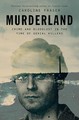
By Caroline Fraser
However Fraser had an thought, one she’d not seen explored. When she was younger, and when these males have been terrorizing her area, industrial smelters have been extracting parts corresponding to iron, copper, lead, aluminum, and zinc from ores. These vegetation have been additionally pumping out steady plumes of poisonous vapors, releasing lead and arsenic into the atmosphere. Through the years that the smelters operated, these parts have been current within the air; even after the passage of the Clear Air Act in 1963 and the institution of the Environmental Safety Company in 1970, their airborne assaults have been solely starting to taper off. Fraser saved discovering threads between environmental disaster and homicide, and in Murderland, she makes the unconventional argument that the rise of serial killing has deep roots within the creation of commercial waste. The connection isn’t as far-fetched as it might seem.
Information bear out the connection between elevated lead presence and elevated crime charges. A 2022 meta-analysis of two dozen papers offered extra proof for the connection, and famous that publicity to steer, a neurotoxin, may amplify aggressive and impulsive behaviors. As soon as its harms have been absolutely understood, leaded gasoline, a serious supply of publicity, was phased out starting in 1973; it was absolutely out of use by 1996. New lead paint and lead pipes have been additionally banned within the Nineteen Seventies and ’80s. In 1994, a examine printed within the Journal of the American Medical Affiliation discovered that the imply blood lead ranges of these aged 1 to 74 declined 78 p.c from 1976 to 1991. Youngsters born after these interventions had much less publicity than these raised within the a long time earlier than.
Now contemplate the sharp drop in violent crime, notably homicide, within the nation’s most populated metro space, New York Metropolis, beginning within the Nineteen Nineties, after a terrifying peak of two,245 murders in 1990. As of this writing, there have been 112 murders in all 5 boroughs in 2025, the bottom quantity in metropolis historical past, in response to the New York Metropolis Police Department. Two generations of NYC youngsters have grown up with minimal lead presence in metropolis condominium buildings, and lecturers such because the Amherst School economics professor Jessica Wolpaw Reyes have argued that decrease ranges of lead publicity in childhood correlate to lowered criminality.
Establishing a tripartite construction of homicide, industrial historical past, and memoir is an advanced job. Fraser comes near pulling it off, as Murderland is splendidly propulsive and onerous to place down. However in casting about for a grand unified idea connecting serial homicide to a bigger environmental phenomenon, Fraser falls right into a entice I’ve taken to calling the “Bundy Downside”: Every time he’s current in a narrative, even when the main focus turns elsewhere, he dominates it; the abominable particulars of his fable, such because the sheer variety of his victims and the enraging failures of legislation enforcement, take up all of the accessible air. Bundy is the malware of narrative. By specializing in him, Fraser relegates her thesis in regards to the injury carried out by air pollution to the background. Extra vital, Bundy’s precise victims, the handfuls of ladies and ladies whose lives he snuffed out, develop ever dimmer.
“Welcome to the loopy wall,” Fraser declares within the guide’s introduction. She compares her investigation to the trope of crime obsessives or TV detectives who stew over a board stuffed with clues and ephemera, pushing “pins into wall maps, looking for the sample, to research, to grab a cloud and pin it down.” At finest, they could provide you with the wrongdoer; at worst, they tumble into the darkish realm of conspiracy idea. Fraser is able to present her work, piecing collectively her assortment of images, timelines, and surveys “till the entire thing resembles a graph of sheer lunacy, a visible eruption of obsession.”
Fraser, most just lately the writer of a biography of Laura Ingalls Wilder, which gained a Pulitzer, appears an unlikely candidate to spend years of her life marinating within the granular trivia of serial killers. However she has explored aspects of violence and narrative in a number of essays printed by The New York Evaluation of Books, together with two on Joyce Carol Oates and a separate 2021 article, “Homicide Is My Enterprise,” on the state of true crime (full disclosure: She included my 2020 anthology, Unspeakable Acts, in her article). That final essay, Fraser acknowledges, “proved important in considering” the mission that turned Murderland.
Fraser doesn’t imagine it’s a coincidence that would-be serial murderers grew up close to industrial websites expelling heavy metals. Ted Bundy, the writer’s fundamental case examine, was born in 1946 to an unwed mom with unsure paternity and raised within the Skyline neighborhood of Tacoma, Washington, as leaded-gas fumes wafted by the streets. Gary Ridgway, the longer term Inexperienced River Killer, was born three years after Bundy and resided a few miles from the Seattle-Tacoma Worldwide Airport, the place freeway and jet-fuel vapors combined with the lead-loaded air. Even the cross-country-traveling serial assassin Israel Keyes, not born till 1978, had a childhood connection to a remaining industrial plant within the Colville, Washington, space.
The writer lays a lot of the blame on the toes of two Gilded Age households: the Rockefellers and the Guggenheims. The Rockefellers made their cash in oil, and the Guggenheims in mining; they’d later each personal (and combat for management of) the worthwhile American Smelting and Refining Firm, later often known as ASARCO. ASARCO ended up everywhere in the nation, however Tacoma proved notably engaging for its potential entry to minerals. For practically a century, a smokestack a whole bunch of toes excessive shot lead and arsenic into the sky.
However the risks of smelting weren’t unknown. In 1913, the chemist Frederick Gardner Cottrell wrote: “The issue of smelter smoke is fully distinct from that of odd metropolis smoke.” Elements corresponding to zinc, sulfur dioxide, lead, and arsenic, he continued, “can’t be merely ‘wiped out.’” As an alternative, they linger within the air, are absorbed into the bloodstream, make their means into the soil, and get handed down from moms to fetuses. These dwelling in proximity to a smelter plant have been experiencing a slow-motion well being catastrophe. Fraser writes about how ASARCO, like tobacco firms, tried to downplay the risks. By the Nineteen Seventies, the corporate’s claims strained credibility.
On the identical time, a seeming plague of serial homicide was reaching an apex. Fraser juxtaposes the rise and fall of smelting with Bundy’s escalating spree of crimes, characterizing every homicide he dedicated not solely as a person act of abrupt violence, but in addition as one a part of a wider system of senselessness. The story must be, she argues, that the oligarchs who noticed alternative and revenue in an trade that might sicken scores of Individuals additionally created an much more disturbing by-product within the type of these murders. However though Fraser does her damnedest to keep away from it, Bundy repeatedly steals focus from the muck of smelter waste. Maybe it’s inevitable that systemic, slow-motion violence feels much less dramatic than people killing people: In any case, these males actively selected, typically many times, to finish one other individual’s life. The fumes are actually simpler to disregard or deny than the visceral, speedy violence of serial homicide—which is far rarer, and but, for a lot of, way more horrifying.
Fraser works tirelessly to make her correlations convincing. Her anger at environmental destruction, at males’s capability to hate and homicide ladies in wholly novel methods, and on the indifference of American society is obvious. However despite the fact that I used to be carried alongside by the narrative, I puzzled if including “a light-weight dusting from the periodic desk on prime of all that trauma” actually provided the reason she sought.
Different components might have performed a job within the general discount of crime charges since lead was phased out of American each day life: elevated police presence in main cities; the rising sophistication of detecting and matching DNA proof; surveillance, with cameras—in pockets, on buildings—completely in every single place. And totally different social-impact theories have additionally been put ahead: The economists John Donohue and Steven Levitt have related legalized abortion with decrease crime charges, for instance. The serial-killing period, which noticed greater than 100 of those murderers performing concurrently in a given yr, is firmly within the rearview mirror, and charges of different violent acts have trended downward because the mid-Nineteen Nineties.
The Bundy Downside might assist clarify why Individuals understand trendy crime charges, particularly rape and homicide, as sky-high—an understanding not rooted in actuality. Male-on-female violence is, undeniably, a unbroken scourge. However culturally, we are inclined to ignore its commonest manifestations—60 p.c of murdered ladies are killed by an intimate companion or member of the family—in favor of the vivid picture of ladies menaced by outwardly charming however secretly sinister figures, corresponding to Bundy. This isn’t a components that permits us to think about how the misogyny that animated most of the serial killers of the twentieth century was inspired or shared by their wider tradition.
Even Fraser fails to account for this: If elevated lead ranges precipitated the violence, why did it stay skewed alongside gender strains? (From 1900 to 2010, 88.6 p.c of all serial killers, and greater than 90 p.c of these in america, have been male; simply over 51 p.c of their victims, nonetheless, have been feminine, although white ladies have been the most certainly group to be murdered.) She doesn’t absolutely pursue that query. Nor does she satisfactorily reply why, if industrial air pollution was nationwide, there was a serial-killing cluster particularly within the Pacific Northwest.
Maybe my very own loopy wall is totally different. It posits that individuals who find yourself killing and individuals who don’t aren’t initially that a lot totally different from each other, and a confluence of random and semi-random occasions—damaged properties, sexual trauma, poverty—may contribute to future violence, but in addition may not. My wall craves narrative but in addition is aware of that human habits will be mystifying, and that making an attempt to make order from chaos is doomed to fail.
There’s worth in seeing an even bigger image, and I’m glad to have adopted the threads that Fraser unspooled. However there may be equal, if not higher, worth in accepting what we don’t, and may’t, know. And if the horrific uptick in serial killing stays an unexplained phenomenon, but fewer ladies and ladies at present endure from this unspeakable violence, then I can reside with that.
While you purchase a guide utilizing a hyperlink on this web page, we obtain a fee. Thanks for supporting The Atlantic.