
This entry was posted on Could 20, 2025 by Charlotte Bell.
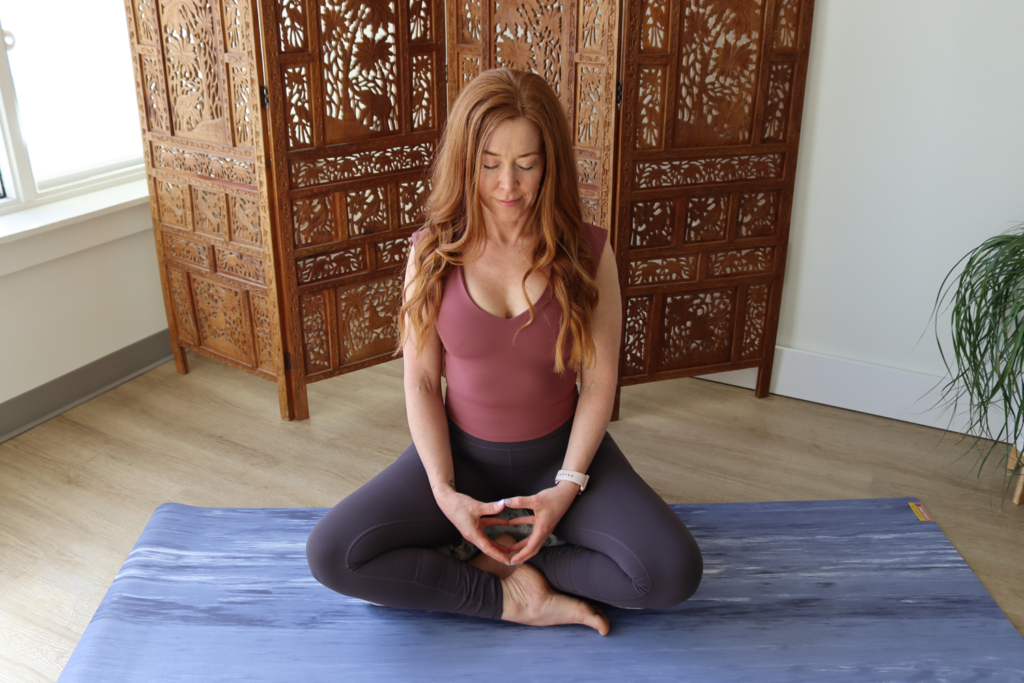
There’s energy in your fingers, greater than you may assume. I used to be first uncovered handy mudras throughout iRest (Yoga Nidra) coaching with Richard Miller, PhD, many years in the past. Whereas I knew our fingers are extremely enervated, and command plenty of actual property within the mind’s physique maps, I had no concept how simply completely different hand positions translated to results in the remainder of the physique. In Miller’s coaching, I discovered mudras for pranayama, meditation, and positions meant to “mild up” every chakra. Nevertheless, we didn’t follow Hakini Mudra.
Usually known as “Mind Energy Mudra” or “Mudra for the Thoughts,” Hakini Mudra is claimed to reinforce mind energy. In accordance with the yoga custom, training this mudra improves focus, reminiscence and focus. I discovered Hakini Mudra from yoga trainer Jenny Otto, as a place that may give us entry to completely different areas of our “respiratory area.”
Why Develop Your Respiration House?
In accordance with an article in Therapeutic massage & Bodywork Journal, “The Science of Mouth vs. Nostril Respiration” by John Douillard, the ribcage turns into a literal cage for our lungs and diaphragm over time. Extreme sitting, shallow respiratory and sedentary life all contribute to this downside. When the ribcage turns into inflexible, the diaphragm can not totally contract once we inhale. Because of this, our respiratory turns into shallower.
Right here’s how Douillard explains it:
”When the diaphragm contracts, it attracts oxygen into the lungs, forcing the ribcage to increase. Over time, because the ribcage turns into extra rigicl, the diaphragm weakens and can’t totally contract on inhalation and chill out on exhalation. This implies the breath sample turns into shallow. Through the years, we’re prone to turn into shallow breathers, participating in what is named over respiratory.
“Throughout shallow respiratory, 75 p.c of the oxygen we inhale is exhaled unused. Shallow respiratory additionally forces us to breathe out extreme carbon dioxide. On this shallow respiratory state, the oxygen ranges within the blood keep excessive whereas CO2 ranges plummet. That is the right storm for anxiousness, which is why when people have a panic assault, they attempt to enhance carbon dioxide ranges by respiratory right into a paper bag. Whereas persistent blood ranges of extra oxygen and low-carbon dioxide enhance the physique’s srress response, rising blood ranges of carbon dioxide even have a sedation impact on the physique.“
I extremely advocate you learn all the article (linked above). It provides important details about the significance of diaphragmatic respiratory. It’s a should for yoga lecturers!
How one can Observe Hakini Mudra to Develop the Breath
Hakini Mudra may give us entry to the decrease, center and higher respiratory areas, just by how we contact our fingertips.
- Start by discovering a snug seated place. Ensure you have sufficient assist underneath your hips in order that your backbone can relaxation in its pure curves. Right here’s an article with ideas for figuring out the very best meditation cushion to your physique. You can even follow in a chair if sitting on the ground doesn’t work to your physique.
- Place your fingertips collectively. Contact flippantly; make sure that your fingers should not urgent exhausting. On the identical time, your fingers ought to join solidly—not too exhausting, not too mushy.
- Take 5 or extra deep breaths, adjusting your posture to accommodate deep respiratory. Be sure that your ribcage and stomach are increasing outward as you inhale, and contracting inward as you exhale. Inhale totally, however with out pressure. Exhale fully, with out pressure.
- Now press your pinky and ring fingers collectively barely extra firmly than the opposite fingers. Proceed to breathe, and spot the place you’re feeling the “middle” of your breath inside your torso. Take 5 to 10 deep breaths.
- Let go of the pinky and ring fingers, touching them flippantly once more. Then press the center fingers collectively barely extra firmly than the others. Take 5 to 10 deep breaths, noticing the place you’re feeling the middle of your breath.
- Let go of the center fingers, touching them flippantly once more. No press the thumbs and index fingers collectively a bit extra firmly than the others. Take 5 to 10 deep breaths, noticing the place you’re feeling the middle of the breath.
- Now contact the fingers evenly, flippantly, and take just a few extra breaths earlier than returning to common respiratory.
Whilst you’re training, be at liberty to change backwards and forwards between steps 4-6 that can assist you really feel variations in how the finger contact influences your respiratory. Observe this any time to assist hold your ribcage and diaphragm supple, and your breath free and straightforward.
About Charlotte Bell
Charlotte Bell found yoga in 1982 and commenced instructing in 1986. Charlotte is the writer of Aware Yoga, Aware Life: A Information for On a regular basis Observe and Yoga for Meditators, each printed by Rodmell Press. Her third e-book is titled Hip-Wholesome Asana: The Yoga Practitioner’s Information to Defending the Hips and Avoiding SI Joint Ache (Shambhala Publications). She writes a month-to-month column for CATALYST Journal and serves as editor for Yoga U On-line. Charlotte is a founding board member for GreenTREE Yoga, a non-profit that brings yoga to underserved populations. A lifelong musician, Charlotte performs oboe and English horn within the Salt Lake Symphony and people sextet Crimson Rock Rondo, whose DVD received two Emmy awards.