
As I write this, it’s the second week in January. By now, many individuals have reneged on their New Yr’s resolutions. If not but, they could accomplish that quickly, as 23% of individuals give up their resolutions by the top of the primary week of January, and solely 9% of resolution-makers full them by the top of the yr (1).
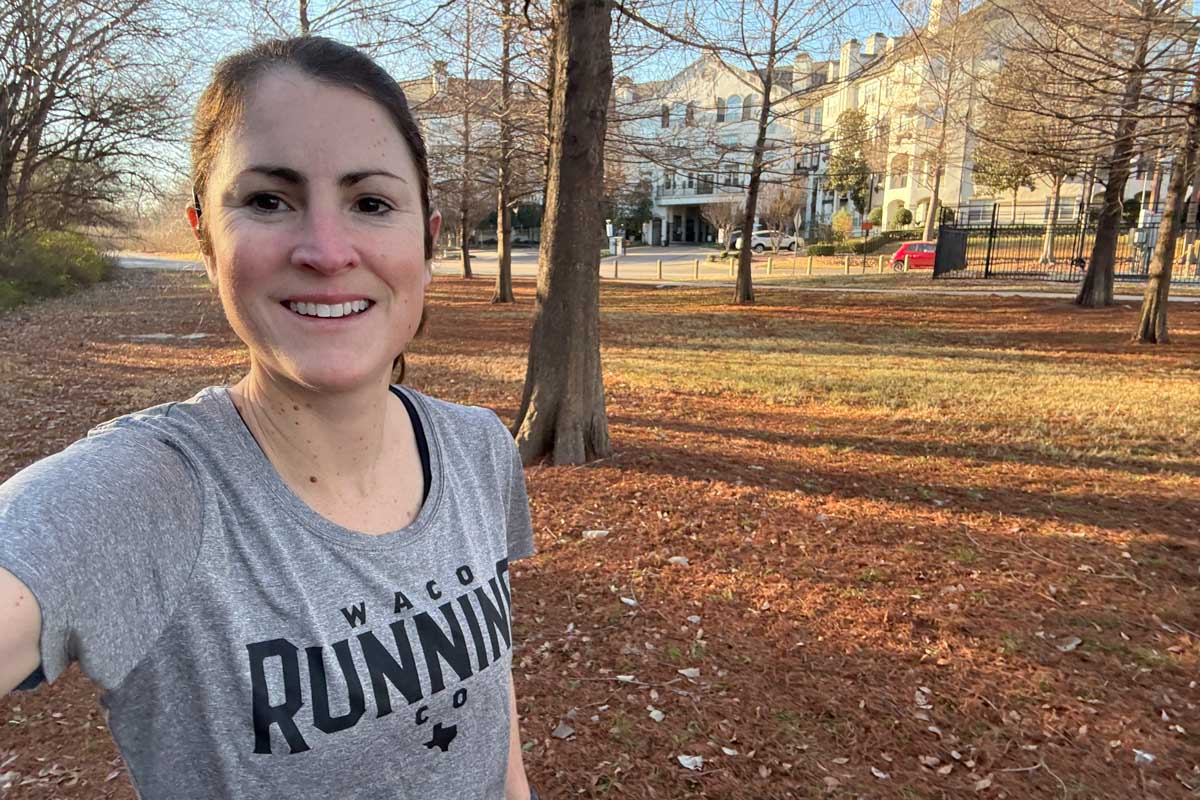
Sabrina studying the best way to be human via working. Photograph: Sabrina Little
Even so, the flip of the brand new yr events self-reflection. That is helpful, particularly when accompanied by the intention to enhance. And if, or when, we give up our resolutions, we be taught one thing vital about ourselves — that we aren’t glorious and we didn’t develop into glorious once we tried.
Excellence is tough. For instance, it’s simpler to be impatient than affected person. It’s simpler to be unjust than simply when justice means advocating for others or difficult techniques. It’s simpler to retreat from arduous targets — like large race goals or complicated work initiatives — than to see them via to completion. It’s simpler to be lazy than diligent, irresolute than perseverant, fickle than stalwart. Advantage is tough.
Edifying Books
Like many runners, I’m a ebook individual. Like many ebook individuals, I’m a runner. Each working and studying have been vital sources of edification in my life. Each function laboratories for ethical cultivation and assist me to see myself and others extra truthfully.
Final month, I supplied a listing of my favourite sports activities books from the previous yr. I promised to supply an extra listing of classical texts I like to recommend for runners — and for individuals normally. These should not latest books — until you contemplate 375 BCE latest. They’re additionally not sports activities books. They’re books from the Nice Texts custom which have enduring significance as a result of they ask perennial questions on what it means to be human.
Within the spirit of the brand new yr — and in recognition of waning resolutions to be higher — listed below are 4 books that I like to recommend. They’ve meant an amazing deal to me as a human and a runner.
Think about this. You’re deep inside a cave, dwelling within the shadows and listening to echoes. Abruptly, you’re drawn out of the cave. You’re pressured to ascend the steep upward means, which is painful and tiring, and while you emerge from the cave, you’re confused and blinded by the sunshine (2).
No, this isn’t a path race description — though, if it had been, I’d register instantly. It’s the delusion of the cave present in Ebook VII of Plato’s “The Republic.” Socrates supplies this picture within the context of a dialogue on the character of schooling (3).

Working towards the sunshine. Photograph: iRunFar/Eszter Horanyi
Plato wrote “The Republic” round 375 BCE. It’s a Socratic dialogue, which means it’s a dialog that options Socrates and several other interlocutors. It reads like a play or the transcript of an prolonged, amusing dialog. As you learn, a personality will say one thing incorrect that sounds affordable sufficient. Then Socrates challenges the thought, and you’re chastised alongside the character who stated one thing you initially discovered smart. In a dialogue, philosophy is preserved in a residing type; you may take part within the inquiry as you learn.
This ebook has perennial relevance throughout many subjects — justice, the situation of the soul, reality, happiness, politics, growing old, mendacity, love, and advantage. Runners will benefit from the part on the schooling of the guardians. A gaggle of males is tasked to protect justice within the metropolis. They’re prescribed bodily coaching, a meal plan, and poetry to organize them for that activity. Each time I learn “The Republic,” I take into consideration my very own bodily coaching — working — and surprise the way it shapes me. What does it imply for sports activities to coach somebody to be extra simply? It is a line of inquiry we obtain from Plato, and it appears significantly germane for our present second of social unrest and political strife.
If I ask you why you ran at the moment, you would possibly inform me about weekly mileage. If I ask you why you goal to satisfy that weekly mileage, you would possibly say one thing a few racing objective. If I ask you why you chose that racing objective, this chain of questioning wouldn’t proceed indefinitely. Ultimately, your “why” could be linked to your imaginative and prescient of a great life, or of happiness.
Aristotle’s “Nicomachean Ethics” begins with a memorable assertion — that all the things goals at some good. He investigates the best good for a human. It is a helpful train for anybody; to ask the massive query — “what are individuals for?” — or to research the ends at which our lives ostensibly goal. That is an train we bear as runners once we communicate in regards to the “why” that sustains us via tough miles or arduous terrain. Figuring out our “why” issues as a result of being firmly rooted in a goal helps us to withstand despair in exhausting moments. It additionally supplies coherence throughout many seasons of life — seasons which can or could not contain working.

Understanding our “why” can preserve us shifting when issues get exhausting. Photograph: iRunFar/Eszter Horanyi
The “Nicomachean Ethics” is my favourite ebook. It investigates advantage, vice, freedom, feelings, the political, the contemplative, friendship, happiness, and character growth. Of curiosity for a runner is the method by which we develop virtues — excellences — by repeated follow. This construction has a kinship with athletics. In working, now we have a every day follow in excellence, attempting to enhance via repetition. We follow glorious habits of considering and feeling once we prepare, and we attempt to develop into higher. Creating virtues occurs similarly.
Have you ever ever been getting ready to despair in a race, and then you definitely persuade your self that you’re really high-quality? I’ve. So has Boethius.
Ebook I of “The Comfort of Philosophy” is entitled “Boethius bewails his depressing state.” He feels dangerous, and he feels dangerous for himself — a deadly mixture. Belief me, I’ve been there. In lengthy races, “gloomy songs make no feigned tears bedew my face (4).” Nevertheless, my tears are resulting from my very own imprudence in endeavor an unreasonable pastime. Additionally, my imprisonment is figurative. Boethius’ imprisonment is each literal and unjust. He wrote this textual content in jail whereas awaiting execution by the Ostrogothic king, Theodoric the Nice.
Boethius begins the ebook by bemoaning his misplaced fortune. Then he’s visited by Girl Philosophy. That is akin to a race hallucination. For instance, throughout a 48-hour run, I as soon as thought I used to be surrounded by cats. Girl Philosophy helps Boethius to reconceive his scenario. She factors out that, whereas he misplaced lesser items, he retains advantage, which is of better worth. Additionally, Boethius is extra highly effective than his captors as a result of their energy is misdirected. They’re incorrect about what is going to actually make them glad, so their energy is for naught (5).
Mates, I hope that when you’re stumbling via the wilderness within the closing miles of an prolonged race, Girl Philosophy talks some sense into you. Although your situation could look bleak, you’ve got solely misplaced some decorative items of fortune. Advantage issues extra.

When stumbling, take heed to Girl Philosophy. Photograph: Sabrina Little
This is able to not be a critical listing of classical textual content suggestions for runners if I didn’t embrace one of many biggest journey tales in historical past. Learn it. Your personal misadventures could seem trivial when you examine Odysseus’ 10-year trek residence, filled with unanticipated obstacles. These embrace a cave nap with a Cyclops and a steep, mid-race descent into precise hell. Then, as a substitute of being greeted fortunately on the end, he has to display archery expertise to win again his spouse.
This trek sounds brutal, and Odysseus doesn’t have the posh of moisture-wicking garments, a GPS watch, or carbon-plated racing footwear. Additionally, individuals usually joke that ultrarunning is an “consuming competitors with some working alongside the way in which.” Odysseus’ journey is identical. Meals is a chorus all through “The Odyssey” — bread, wine, cheese, lotus, and the Cattle of Helios. If Yelp meals opinions existed again then, Odysseus would have an account. He would warning towards consuming the lotus, which generates apathy. He would give the Island of the Lotus Eaters a one-star evaluate.
Closing Ideas
Alongside working, classical texts have been a crucial supply of edification in my life. These 4 books, particularly, have formed me an amazing deal. They train me about what it means to be human, and so they have particular relevance for runners. I problem you to learn one — or all — of them this upcoming yr.
Do you’ve got any books to share which have formed you and your working?

Sabrina Little along with her daughters, passing on classes of excellence. Photograph courtesy of Sabrina Little.
Notes/References
- Batts, R. 2023. Why Most New Yr’s Resolutions Fail. Lead Learn At this time. Ohio State College. Net <https://fisher.osu.edu/blogs/leadreadtoday/why-most-new-years-resolutions-fail> Accessed 11 January 2026.
- Plato. The Republic. 514a-516a
- Plato. The Republic. 511a-514a
- Boethius, A.M.S. 2009. The Comfort of Philosophy. Transl. by W.V. Cooper. Ex-Classics Venture. Net <https://www.exclassics.com/consol/consol.pdf> Accessed 13 January 2026.
- It’s tough to speak the power and breadth of a strong piece of writing in 4 paragraphs. There’s much more value saying right here. My apologies to Boethius.